

One of the most powerful ideas in Ayurveda is this: You are born with a natural blueprint. But life often pulls you away from it. That blueprint is called your Prakriti. It is your unique combination of energies, inherited at birth. It determines how you look, how your mind works, what kinds of foods suit you, and how you respond to stress or change.
The shifts that happen in your body and mind due to lifestyle, diet, environment, emotions, or stress are called your Vikriti. It is your current state – the imbalanced version of your original self.
To bring back health, Ayurveda says we must first understand both. Knowing your Prakriti tells you who you are meant to be. Knowing your Vikriti tells you where you have drifted. Healing, then, becomes a journey of returning to your natural balance.
At Aho Care, we see this every day ..clients struggling with symptoms that modern medicine cannot always explain. But once we understand their Prakriti and current Vikriti through Naadi Pariksha, everything starts making sense. And so does the path to healing. This article will walk you through both concepts in detail, how they differ, how to identify your own Prakriti and Vikriti, and how to bring them back into harmony.
What is Prakriti?
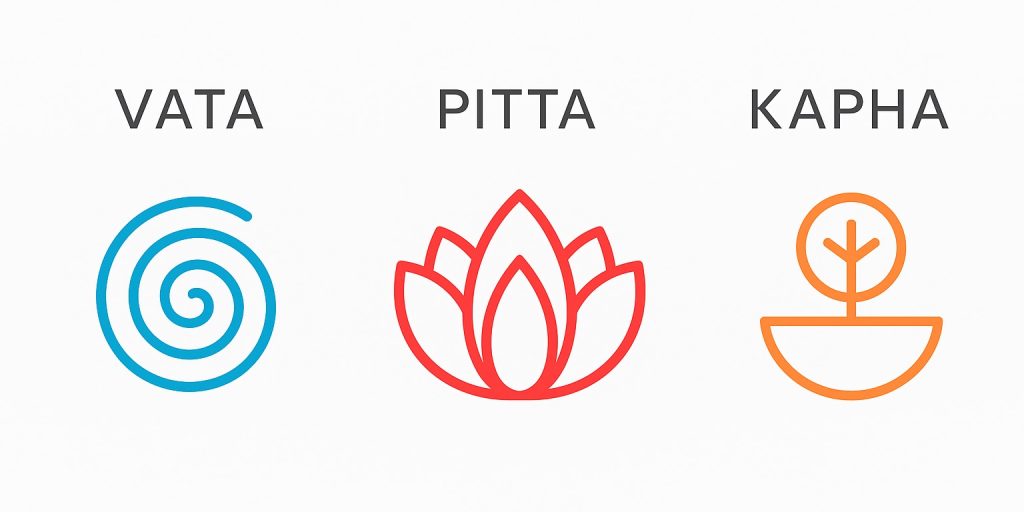
Prakriti is your original constitution. It is formed at the time of conception, based on the combination of Vata, Pitta, and Kapha you inherit from your parents, the state of your mother’s health, the season of birth, and the karmic energies you carry.
This balance remains fixed throughout your life. You cannot change your Prakriti, but you can learn to live in alignment with it. Ayurveda sees every person as a unique mix of the three doshas:
Vata (Air + Space)
Light, dry, cold, fast
Quick thinkers, creative, talkative
Prone to anxiety, dryness, and irregular digestion
Need warmth, grounding, and routine
Pitta (Fire + Water)
Hot, sharp, oily, intense
Intelligent, goal-driven, passionate
Prone to anger, acidity, and inflammation
Need cooling foods, calm environments, and patience
Kapha (Earth + Water)
Heavy, slow, stable, nurturing
Calm, grounded, loyal
Prone to weight gain, congestion, and lethargy
Need stimulation, movement, and light foods
Most people have a dominant dosha or a combination of two. For example, you might be primarily Vata-Pitta or Kapha-Vata. Very few people are perfectly tridoshic (equal amounts of all three).
Your Prakriti determines:
Your physical traits (skin, hair, body shape)
Your digestion and appetite
Your emotional tendencies
Your ideal diet and lifestyle
Your sleep patterns and energy flow
Living in sync with your Prakriti helps maintain good health, strong immunity, and mental clarity. Ignoring it leads to imbalance.
What is Vikriti?

Vikriti is your current state of imbalance. It is how your doshas are behaving right now, based on what you are eating, how you are living, what you are thinking, and how you are handling change.
Vikriti is changeable. It can shift with seasons, emotions, food choices, habits, stress levels, and more.
For example:
You might be a naturally calm Kapha person (Prakriti), but under pressure at work, you may develop high Pitta symptoms like acidity, anger, or hair fall (Vikriti).
Or, if you travel a lot and skip meals, your naturally stable Vata-Pitta constitution may shift toward a Vata imbalance : showing up as anxiety, dry skin, gas, and insomnia.
Understanding your Vikriti is crucial because this is what you treat in Ayurveda. Ayurvedic treatment is not based on your Prakriti. It is based on your Vikriti.
At Aho Care, our Ayurvedic doctors use Naadi Pariksha to understand both your Prakriti and your Vikriti. This is what makes your treatment plan accurate and personal. Without this clarity, even good Ayurvedic remedies may not work.
Prakriti vs Vikriti: the difference explained simply
| Feature | Prakriti | Vikriti |
|---|---|---|
| What it is | Your natural constitution | Your current imbalance |
| When it is formed | At birth | Changes throughout life |
| Can it change? | No | Yes |
| Governs | Your lifelong tendencies | Your current symptoms |
| Helps in | Preventive care, lifestyle planning | Treatment and healing |
| Detected by | Pulse diagnosis, observation | Pulse diagnosis, symptoms |
Understanding both is essential to getting the full picture of your health. Treating only symptoms without addressing Vikriti is incomplete. And treating only Vikriti without knowing your Prakriti can lead to temporary results.
Why the gap between Prakriti and Vikriti matters?
The bigger the gap between your Prakriti and Vikriti, the more discomfort you experience. Most of these problems are not your “fault.” They are signs that your current way of living has moved too far from your natural design.That discomfort could show up as:
Digestive issues (bloating, gas, acidity, constipation)
Skin problems (acne, eczema, dullness)
Emotional imbalances (anxiety, irritability, depression)
Sleep disorders
Chronic fatigue
Irregular appetite and weight fluctuations
Allergies, sinus congestion, hair fall
Healing then becomes a process of:
Identifying the Vikriti (where you are now)
Remembering the Prakriti (who you are at your core)
Using diet, herbs, routine, and therapy to return to balance
This is the real heart of Ayurvedic treatment. At Aho Care, we often see that clients are trying all kinds of remedies without understanding which dosha is truly out of balance. But once they know their Vikriti through Naadi Pariksha, the confusion clears and results begin to show.
How to know your Prakriti and Vikriti?
Some signs can give you clues.
For Prakriti:
What were you like as a child, before any major illness or lifestyle changes?
What is your natural body shape, skin type, and mental tendency?
How do you usually respond to stress when balanced?
For Vikriti:
What symptoms are showing up now?
What has changed in your life recently – diet, sleep, emotions?
Are your digestion, mood, energy, or immunity disturbed?
However, self-diagnosis is often incomplete or incorrect. This is why Ayurveda traditionally uses Naadi Pariksha, a diagnostic tool where the pulse is read by a trained Vaidya to detect dosha imbalances.
At Aho Care, you can book a Naadi consultation with experienced Ayurvedic doctors who will:
Read your pulse in person
Understand your Prakriti and Vikriti
Guide you on a personal healing plan
Recommend diet, lifestyle, and Sri Sri Tattva remedies suited to your needs
This approach saves time, avoids trial and error, and brings more accurate results.
Managing Vikriti without disturbing your Prakriti
Let’s say your Prakriti is Pitta-Kapha. Your natural state is focused, driven, and grounded. But right now, due to stress, your Vata is high – you are feeling scattered, dry, and anxious.
What happens if you start taking strong Pitta-pacifying herbs without addressing the Vata? You may worsen your anxiety or feel weak. That’s why Ayurvedic treatment is never one-size-fits-all. Even among people with the same disease, the path of healing looks different based on the Prakriti-Vikriti mix.
Some examples:
A Vata person with joint pain needs warming and nourishing treatment.
A Pitta person with joint pain needs anti-inflammatory and cooling herbs.
A Kapha person with joint pain needs detox and stimulation.
Sri Sri Tattva’s wide range of classical formulations are designed with this logic. But choosing the right product depends on knowing your doshas. This is where expert guidance makes a real difference.
How lifestyle affects your Vikriti
Here are a few common habits that shift your dosha balance:
| Habit | Increases Which Dosha? |
|---|---|
| Skipping meals | Vata |
| Eating spicy food late | Pitta |
| Oversleeping or no exercise | Kapha |
| Excess screen time or multitasking | Vata |
| Overworking and perfectionism | Pitta |
| Emotional eating or late dinners | Kapha |
Once you know your tendencies and your current imbalances, you can make small daily choices that support healing.
Aho Care supports you in this process, not just with Ayurvedic products but with a roadmap for living well. Even simple routine shifts, like changing your meal timing or switching from cold water to warm, can help reduce Vikriti and bring you closer to your original Prakriti.
Ayurveda is a return to yourself!
You are not meant to feel tired all the time. You are not meant to live with constant acidity, bloating, anger, or anxiety. These are signs that your current life is out of sync with your design.
Your Prakriti is like a personal manual, written at birth. It shows you what kind of food, rest, work, and emotional patterns nourish you. Your Vikriti is the present-day feedback your body is giving. Ayurveda simply helps you listen better. It teaches you to make course corrections, not punishments. It helps you remember that you already have the answers within & you just need to return to your rhythm.
At Aho Care, we’re here to walk that journey with you. Whether it is through Naadi Pariksha, guidance from experienced doctors, or authentic formulations by Sri Sri Tattva, every step is about helping you understand your body better.
Because healing begins with self-knowledge. And self-knowledge begins with listening – to your pulse, your patterns, and your path. Book your Naadi Pariksha at Aho Care and take the first step toward restoring your natural balance.